

By Mike Mathers, MSc, MA, RCC | Addiction & Trauma Counsellor | Founder, Wellness Evolved Counselling
It’s natural to want to correct someone’s behaviour when you’re worried about them. But what actually helps most is connecting before correcting. Confrontation often creates resistance rather than meaningful change.I encourage families to ‘strike when the iron is cold,’ meaning approach difficult conversations when everyone is calm and sober. Another important skill is positive reinforcement, or catching people doing things right. When we notice and acknowledge even small steps in a healthier direction, we encourage more of them. At the same time, it’s important to let natural consequences land and set boundaries that protect your own well-being.
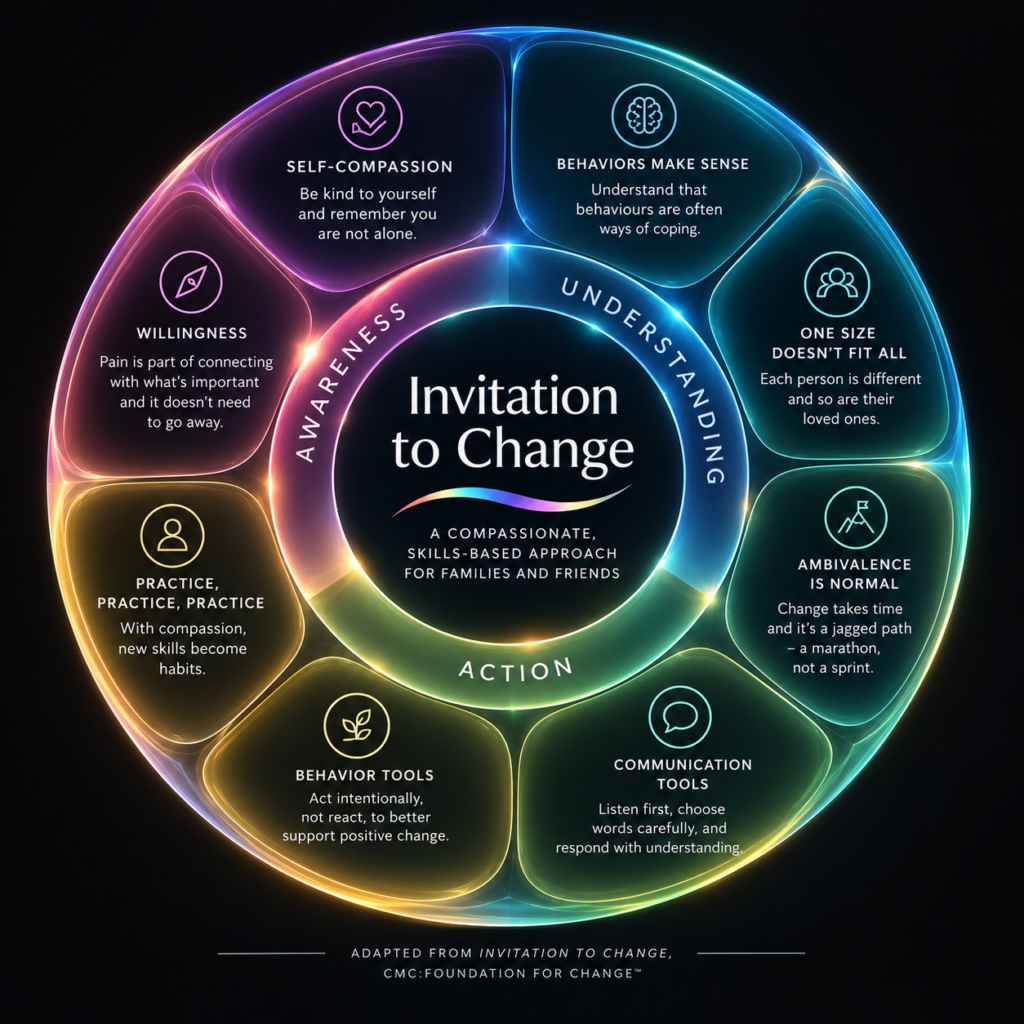
Invitation to Change (ITC) is a behavioural skills coaching approach for families and friends of people struggling with addiction. These are skills you can learn to help protect yourself, strengthen connection and encourage change, even if your loved one isn’t ready to engage in treatment.
A word about labels before we start
People sometimes come to me because someone has called them an “alcoholic,” or because they’re wondering whether they might be one. I think that question is something of a red herring.
Here’s what I often tell them:
“I can assure you that you’re not an alcoholic, because I’ve never met one. Labels are for jars. But that doesn’t mean you don’t have a problem with alcohol.”
The trouble with labels is that people develop a picture of what an “alcoholic” is supposed to look like. If they don’t recognize themselves in that picture, it’s easy to dismiss the possibility that their drinking might be problematic. What matters isn’t whether someone fits a label. It’s understanding their relationship with alcohol, what they’re getting from it and what it may be costing them. That’s why I prefer talking about problematic alcohol use rather than defining people by their drinking.
Why confrontation and tough love tend to backfire
The instinct makes sense. You’ve watched someone you love drink in ways that scare you, and you want it to stop now. An ultimatum, a surprise intervention or a cold shoulder can feel like the strongest tools you have.
In practice, pressure usually gets you defensiveness and secrecy, not honesty. Nobody thinks clearly about their own behaviour while they feel cornered. Shame works the same way: it pushes drinking further out of sight. As I tell families, there’s not a lot of love in tough love.
Waiting for things to hit “rock bottom” is another common piece of advice, and I think it’s a dangerous one. A small brush fire is far easier to put out than a raging inferno. Families can start helping now, long before a crisis.
Connection before correction
Here’s a reframe that changes how families approach this: for your loved one, alcohol is usually a solution. It may be quieting anxiety, numbing old pain or trauma, easing loneliness or making social situations bearable. It’s a poor long-term solution, but it’s doing a job.
When you get curious about what that job is, the conversation changes. You stop trying to win an argument and start trying to understand. That’s what I mean by connection before correction. People are far more open to change from someone they feel understood by.
TRY THIS: A 10-Minute Curiosity Conversation
When things are calm and safe, try asking your loved one what they actually get out of drinking.
You might say: “I’m not trying to convince you of anything. I genuinely want to understand what drinking does for you.”
Spend 10 minutes listening without correcting, arguing or offering solutions. If things become heated, revisit the conversation another time.
Remember: Understanding someone’s behaviour doesn’t mean agreeing with it. Curiosity creates opportunities for connection and change. It also helps to remember who’s in the driver’s seat. You can’t make the decision for your loved one. You can be a steady, trusted voice in the passenger seat.
What Invitation to Change teaches families
Invitation to Change (ITC) is a family approach developed by CMC: Foundation for Change. I’m trained in it and use it with families here. It blends three methods:
- CRAFT (Community Reinforcement and Family Training), which teaches families to reward the behaviour they want to see more of
- Motivational interviewing, a way of talking that draws out a person’s own reasons for change
- Acceptance and Commitment Therapy (ACT), which helps you handle painful thoughts and feelings while you act on what matters to you
CRAFT has a strong research foundation. In a 1999 clinical trial led by William Miller, 64% of people whose family members received CRAFT entered treatment, compared with 30% in the confrontational intervention group and 13% in the Al-Anon facilitation group.
Of course, no approach guarantees that someone will seek treatment. But these skills can help families communicate more effectively, establish healthy boundaries and look after their own well-being, regardless of whether their loved one chooses treatment.
How to talk to someone about their drinking: Strike when the iron is cold
Timing matters just as much as wording. A conversation started right after a drink, mid-argument or in front of others rarely lands. I tell families to strike when the iron is cold: pick a calm, sober moment on purpose. Start with what you’ve seen and how you feel, not a label or a verdict. A few openers that tend to go better than “Why do you keep doing this to us?”:
- “I’ve noticed you seem really tired lately. How are you doing?”
- “I miss our Saturday mornings. Can we plan one this week?”
- “I’m worried, and I’d like to understand what’s been going on for you.”
Catch your loved one doing things right. When they keep a commitment, have an honest conversation or take even a small step in a healthier direction, acknowledge it. Something as simple as ‘I really enjoyed spending time with you this morning’ can make a difference. Genuine appreciation and positive reinforcement help encourage the behaviours that support meaningful change.
*Of course, if you’re feeling threatened or unsafe, your immediate safety comes first. You don’t need to initiate a difficult conversation or stay in a dangerous situation to support someone you love.
“Enabling” versus caring: where the line really is
The term “enabling” has been widely misused in the addiction treatment field, often confusing kindness and compassion with somehow supporting someone’s addiction. This distinction matters because families can become afraid that showing love or offering support is actually making things worse.
Making dinner, staying warm or saying “I love you” is not enabling. Care keeps the connection alive, and connection is often an important part of helping someone move toward change.
Enabling is more specifically about behaviours that inadvertently support continued problematic drinking or shield someone from its natural consequences. This might include funding their drinking, repeatedly calling in sick for them, cleaning up every mess or covering every missed bill. Even here, context matters. The goal isn’t to withhold kindness or punish someone. It’s to stop taking responsibility for things that aren’t yours to manage.
A boundary is about what you will do to protect your own well-being rather than trying to control someone else’s behaviour. “I won’t lend money that I believe will go toward alcohol” is a boundary. “I can’t continue in this relationship if the drinking continues” can also be a healthy boundary, provided it’s an honest expression of your own limits rather than a threat designed to force change.
Boundaries don’t guarantee that someone will stop drinking. They help protect your time, safety, finances and emotional well-being while allowing your loved one to make their own choices. Choose boundaries that are realistic and that you can follow through on consistently. Remember, the purpose of boundaries isn’t to control someone else’s choices. It’s to take responsibility for your own well-being.
Caring for yourself while you care about them
It’s easy to build your whole week around someone else’s drinking: watching for mood shifts, planning around their behaviour and absorbing the fallout. Over time, that can cost you sleep, friendships, peace of mind and your own sense of well-being.
One of the most important principles of Invitation to Change is that your well-being matters too. You don’t have to choose between caring for someone you love and taking care of yourself.
ITC teaches practical skills that help you communicate more effectively, establish healthy boundaries and respond to difficult situations without getting pulled into the same patterns. It also helps you recognize what you can influence and what ultimately belongs to the other person.
The goal isn’t simply to cope with someone else’s drinking. It’s to reclaim your own quality of life while learning how to become a more effective influence for positive change.
Getting support even if they won’t come
Here’s something many families don’t realize: you don’t need your loved one’s participation or even their willingness to change to begin making things better. Invitation to Change is designed to help families and friends develop the skills to create healthier relationships, reduce conflict and encourage positive change without taking responsibility for someone else’s choices.
I offer ITC coaching individually, as a couple or as a family. Sessions are 50 minutes, typically over 6 to 10 sessions, with practical exercises to help you apply what you’re learning between appointments. We can begin with a free 20-minute consultation to explore your situation and whether this approach might be helpful.
And if your loved one becomes curious about their own relationship with alcohol, I also offer addiction therapy. They don’t have to know whether they want to quit or even what change might look like before starting that conversation. Both services are available virtually throughout BC or in person in West Vancouver.
Reaching out
Loving someone whose relationship with alcohol has become problematic can be exhausting in ways that are difficult to explain to people who haven’t experienced it. But you don’t have to wait for things to get worse, and you don’t have to figure everything out on your own. There are practical, evidence-informed skills you can learn that can make a meaningful difference in your life and potentially in the life of someone you love.
If you’d like to explore how Invitation to Change coaching could help, contact us to schedule an introductory call.
***This article provides general information, not a diagnosis or individualized clinical advice. Speak with a qualified healthcare professional about your specific circumstances.
Frequently Asked Questions
Should I give my loved one an ultimatum about their drinking?
Ultimatums intended to force someone to change often create defensiveness and resistance. Healthy boundaries are different. They’re about protecting your own well-being rather than controlling someone else’s choices. You can be compassionate and supportive while still being clear about what you are and aren’t willing to accept. Your safety and well-being matter too.
Can I get help if my loved one refuses treatment?
Absolutely. You don’t have to wait for your loved one to acknowledge a problem or become willing to seek treatment. Invitation to Change teaches families practical skills to communicate more effectively, reduce conflict, establish healthy boundaries and encourage positive change. These skills can make a meaningful difference even if your loved one never attends a session.
Isn’t being kind to them just enabling?
No. This is one of the most harmful misconceptions in addiction treatment. Kindness, compassion and connection are not enabling. Enabling generally refers to behaviours that unintentionally support continued problematic drinking or repeatedly protect someone from its consequences. You can love someone, support them and maintain a meaningful connection without taking responsibility for their choices.
What if they slip after a stretch of not drinking?
Change is rarely a straight line. A return to drinking doesn’t erase the progress someone has made. Rather than responding with shame or disappointment, get curious about what happened and what might help moving forward. Acknowledge the positive changes you’ve seen and remember that setbacks can be opportunities for learning, not evidence of failure.
Should they stop drinking right away?
Not necessarily. For someone who has developed physical dependence on alcohol, stopping suddenly can cause dangerous and potentially life-threatening withdrawal symptoms. It’s important to speak with a physician before significantly reducing or stopping heavy drinking.
When to seek urgent help: If someone develops shaking, sweating, vomiting or significant anxiety after reducing their drinking, seek prompt medical advice. Severe confusion, hallucinations, seizures, chest pain or difficulty breathing are medical emergencies. Call 911 or go to the nearest emergency department.
Beyond these medical considerations, meaningful change doesn’t have to begin with a commitment to abstinence. People can start exploring their relationship with alcohol and developing healthier ways of meeting their needs long before they know exactly what they want to change.